


AGE 0-6
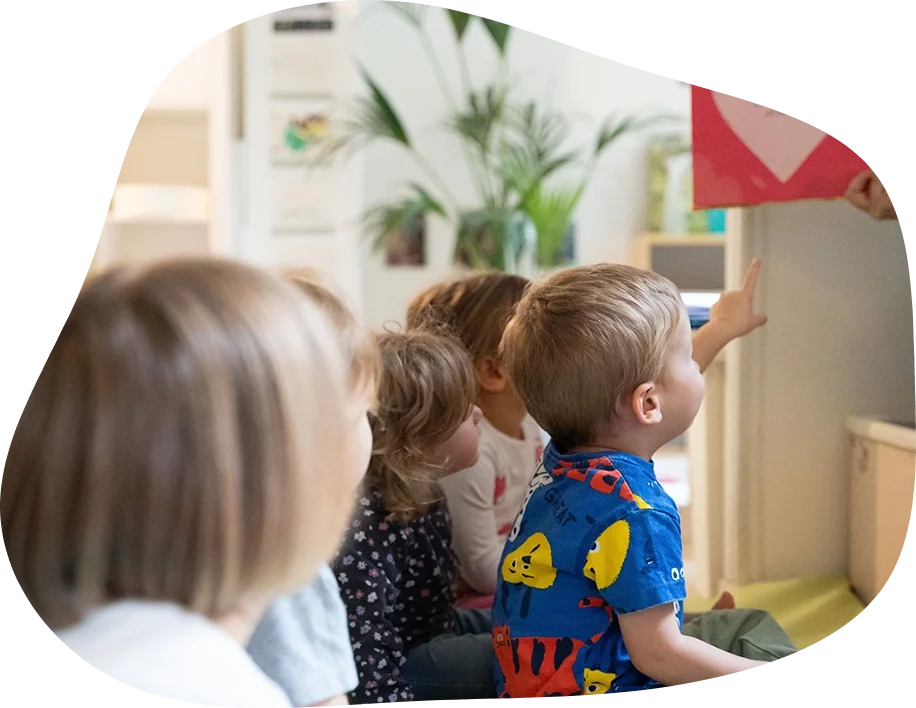
Locomotiva di Momo is a bilingual nursery and pre-school, designed for children aged between 6 months and 6 years.
Book a visitEvery child takes centre stage
Locomotiva di Momo is a place where, every day, children discover something new about themselves and the world, immersed in an environment that has made nurturing relationships the cornerstone of its educational approach.
We draw inspiration from the Reggio Emilia Approach, which is recognised worldwide for its focus on children’s forms of expression.
Alongside this vision is the ‘Una scuola’ Manifesto, which completes our pedagogical framework: an approach that conceives learning as a communal experience, rooted in the local community whilst at the same time open to the world.
It is in this direction that our vision of Outdoor Education and our work on children’s emotional and social development are also developing.
For us, putting children at the heart of everything means enabling each of them to realise their potential within a welcoming community.
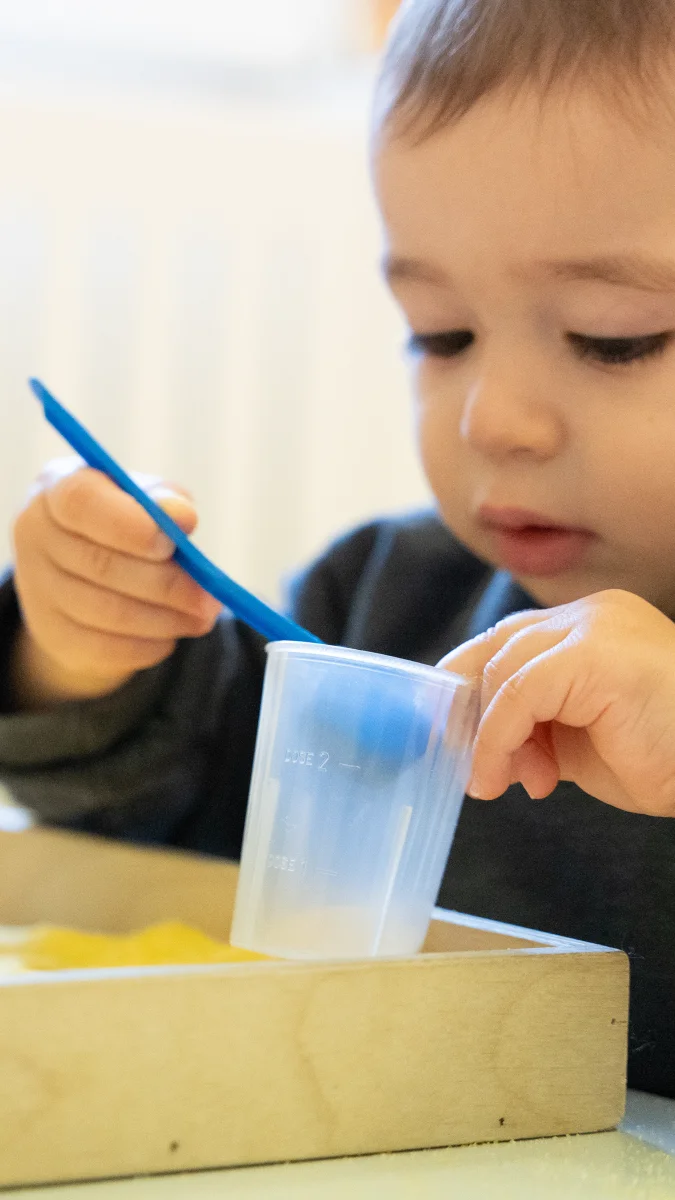
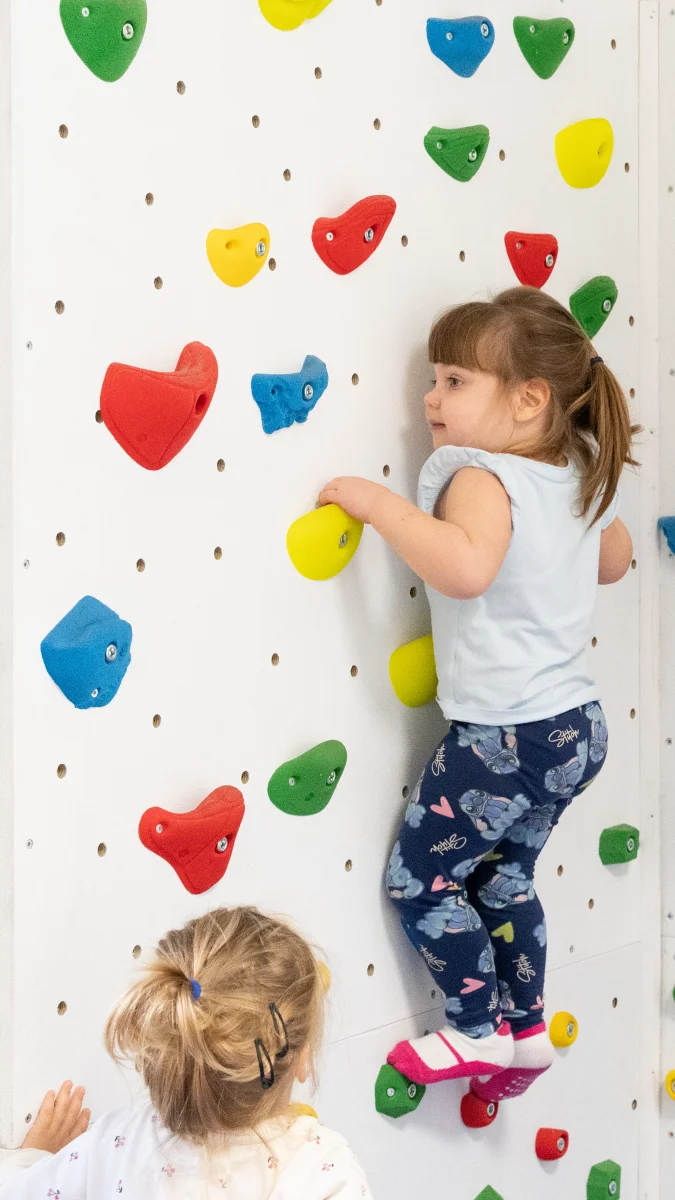
Let’s start with a simple principle: every child brings with them a sense of uniqueness and individuality that enriches the group. They are free to explore, ask questions and experiment, using a variety of tools: picture books, building materials, creative workshops and spaces for movement.
Our aim is for all girls and boys, during their early childhood, to work with us to lay the foundations for their future lives, whilst imagining a world that is even better than the one they live in.
How we work
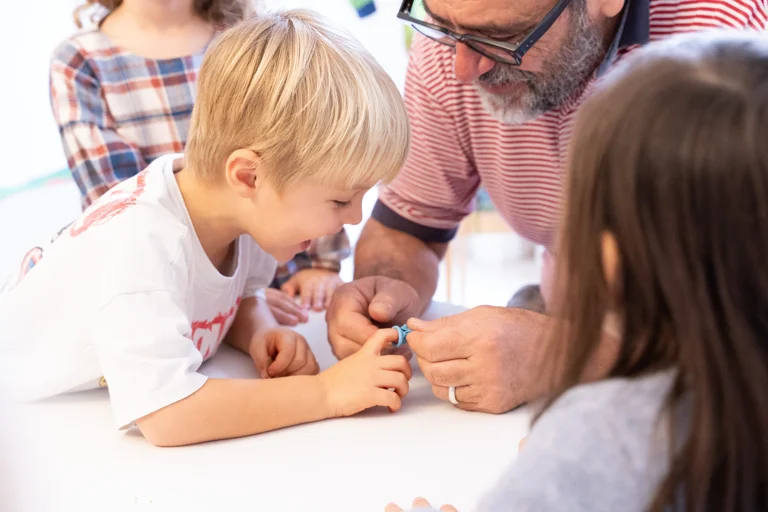
We devote time and attention to observation: their behaviour, interests, the way they play and interact with others.
We reflect on what we observe and design everyday experiences based on these reflections.
- Relationships as the foundation of all learning
- Games, routines and activities that foster independence, growth and self-awareness
- Active teaching methods that encourage exploration and creativity
- A STEAM approach that fosters curiosity and a spirit of inquiry from nursery onwards
- Visual documentation to illustrate growth
The teaching team
Both at the Nursery and at the Pre-school, we have a bilingual team: nursery staff and teachers who are native Italian speakers, often serving as class leaders, alongside nursery staff and English teachers who speak exclusively in English.
On a day-to-day basis, the team’s work is coordinated by an educational coordinator.
An experienced educationalist is leading a further supervision initiative for the educational team, aimed at encouraging constant reflection on their work, whilst focusing their attention on the child and the relationship.
Our educators are passionate and well-trained professionals who undergo continuous professional development through the Becoming Academy and hold a certificate in paediatric first aid.
Italian-English bilingualism


One teacher one language
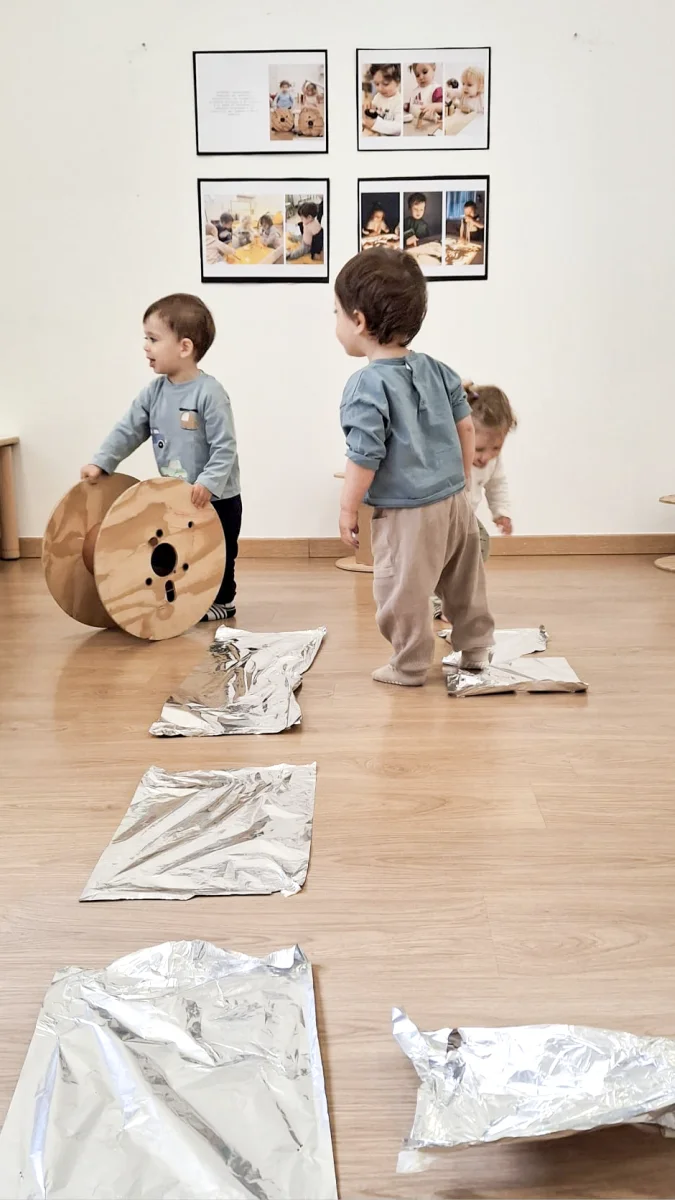
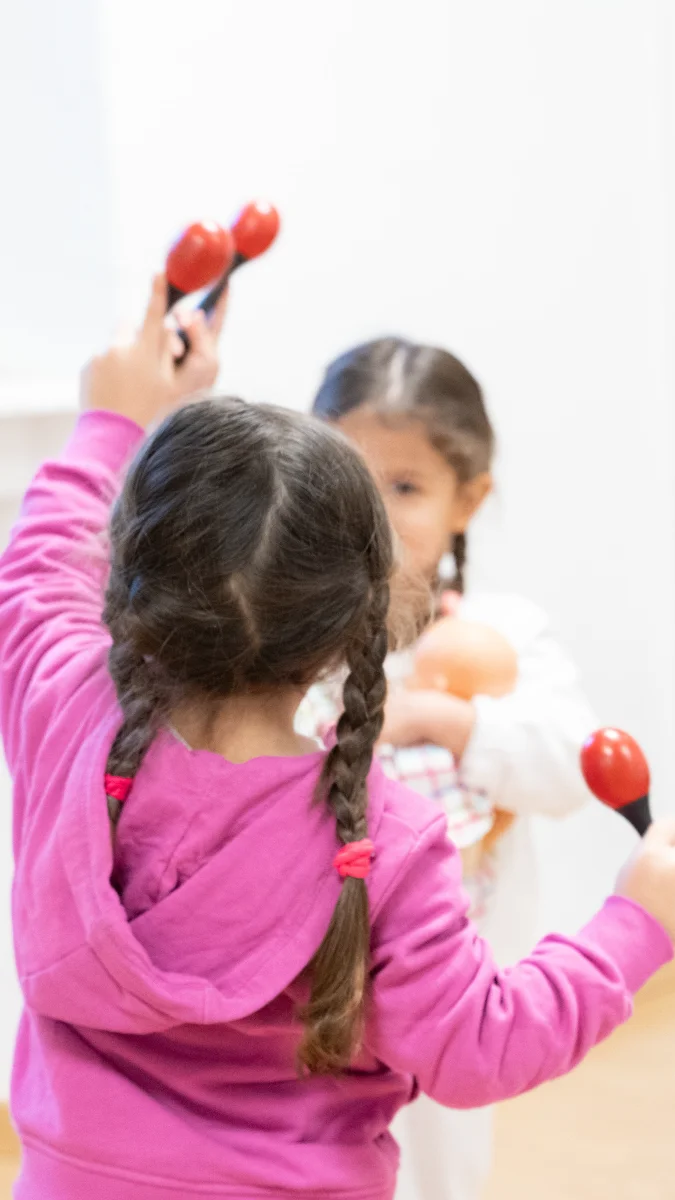
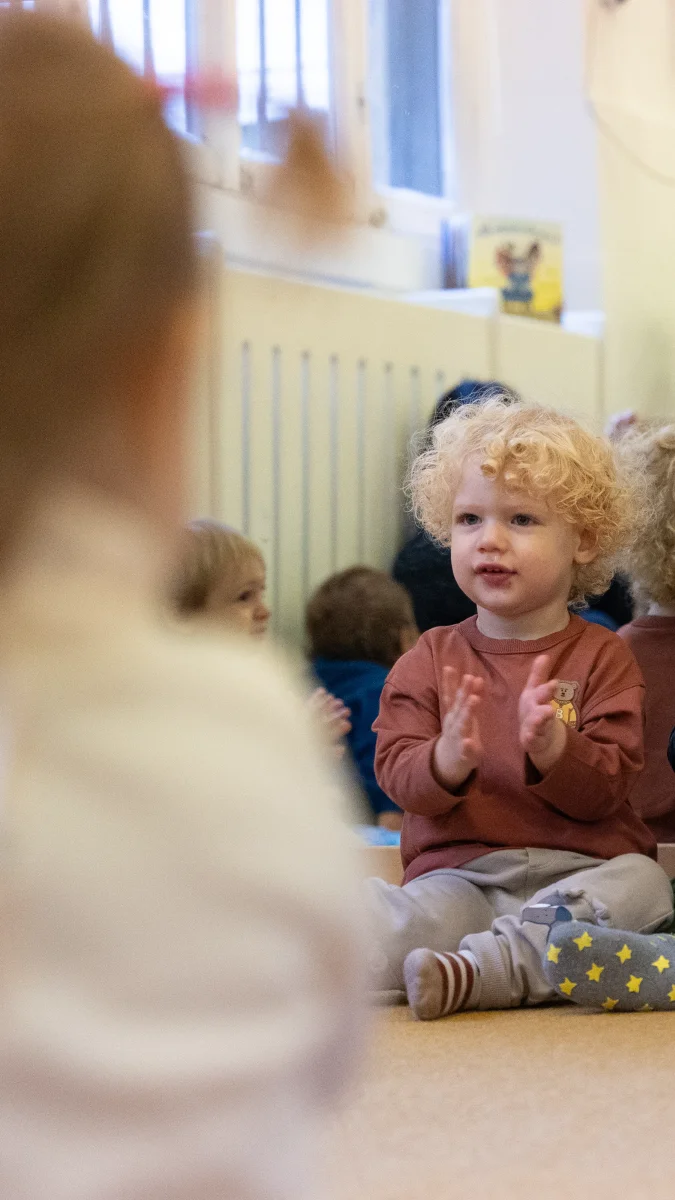
The English language is part of everyday life, with a balanced mix of Italian and English. Each teacher speaks in their own language (one teacher, one language), so the children learn naturally, without being forced.
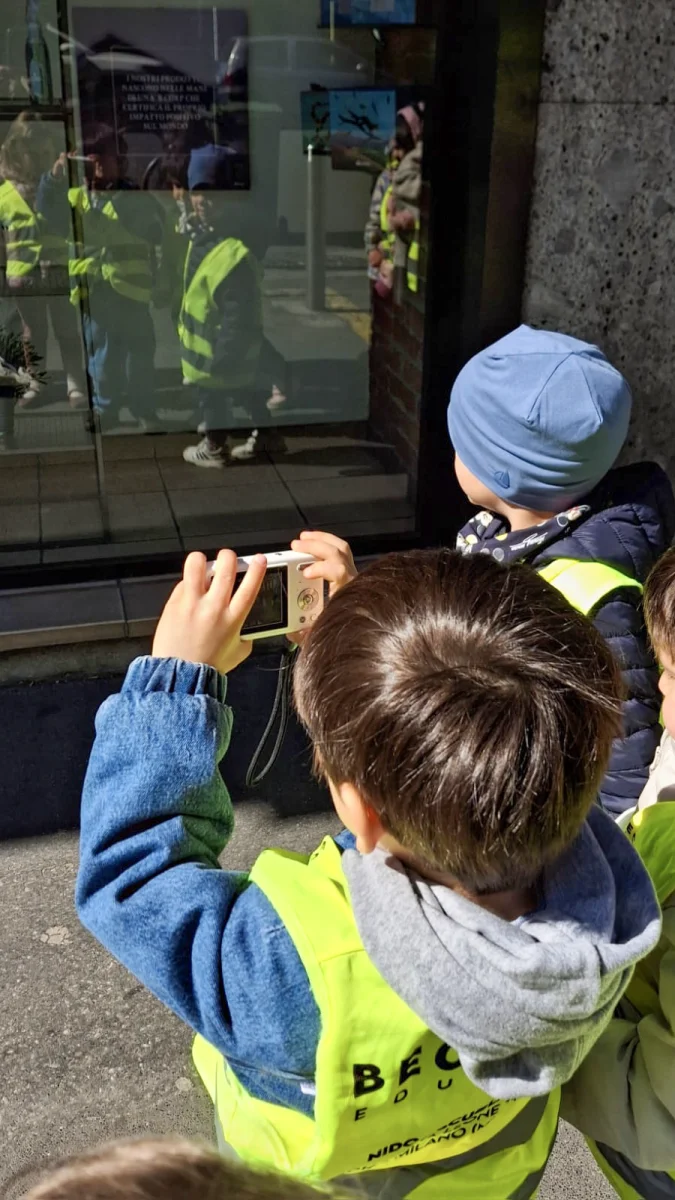
Whether at school, in the park, at the market, in a museum, on public transport or on a school trip, we provide constant exposure to the English language, stimulated and enriched by ever-changing contexts.
- The English teachers are always on hand
- Metodo one teacher one language
- Daily exposure
- Natural, experiential understanding
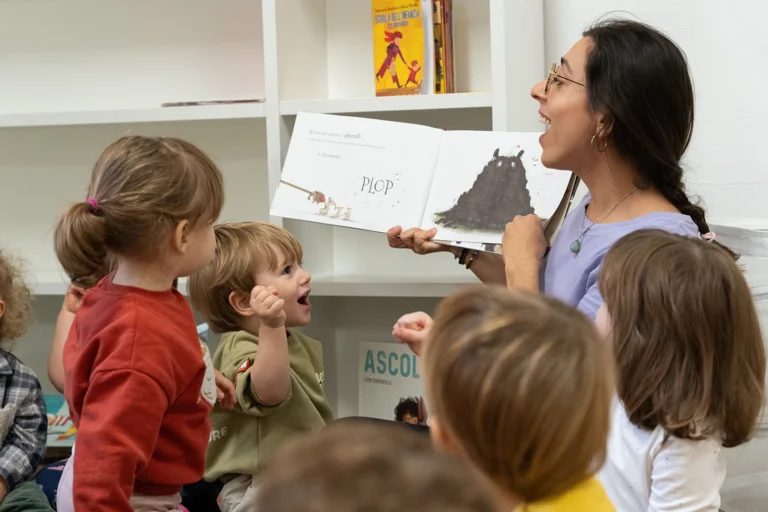
- Use of reading aloud, with an extensive bilingual library
Outdoor Education: learning in nature
Our values
For us, it is a core value: children need to spend time outdoors.
It makes them feel good, they learn a lot, and they’re entitled to it.
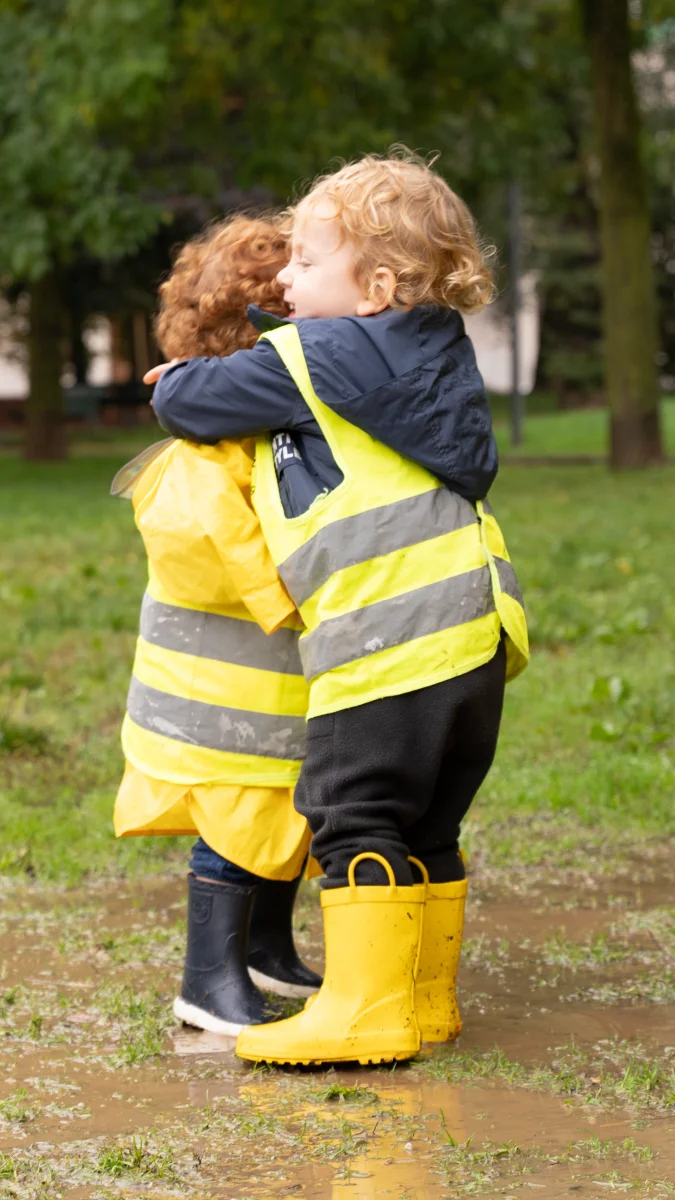
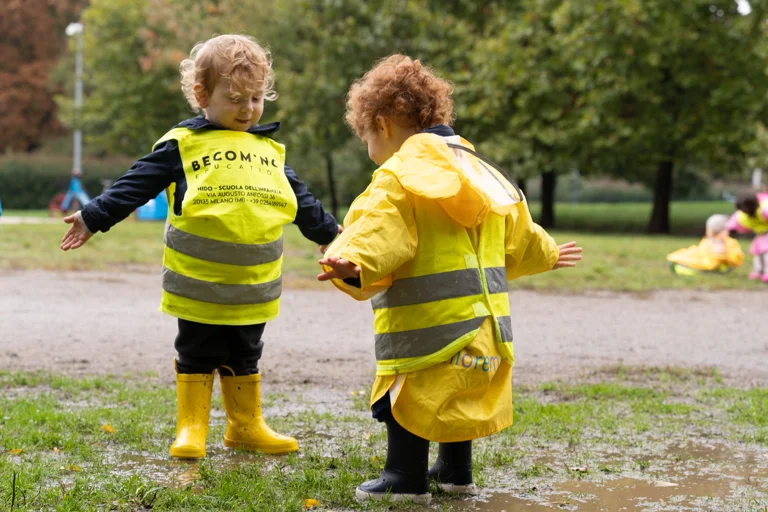
Outdoors, children move about, observe, work together and encounter the world in all its complexity. They discover places, people and activities. They develop a sense of belonging and citizenship skills.
We experience nature in all seasons: in the garden, in the parks and in the local area through regular outings.
Urban Outdoor
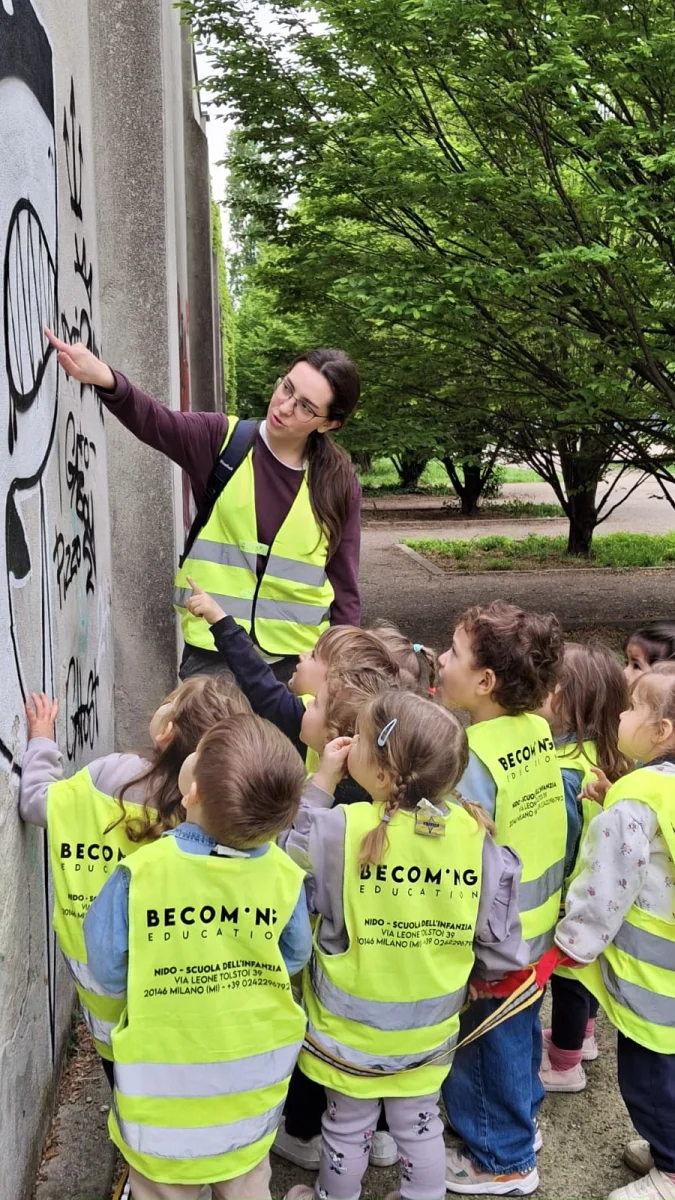
The city is an open-air classroom.
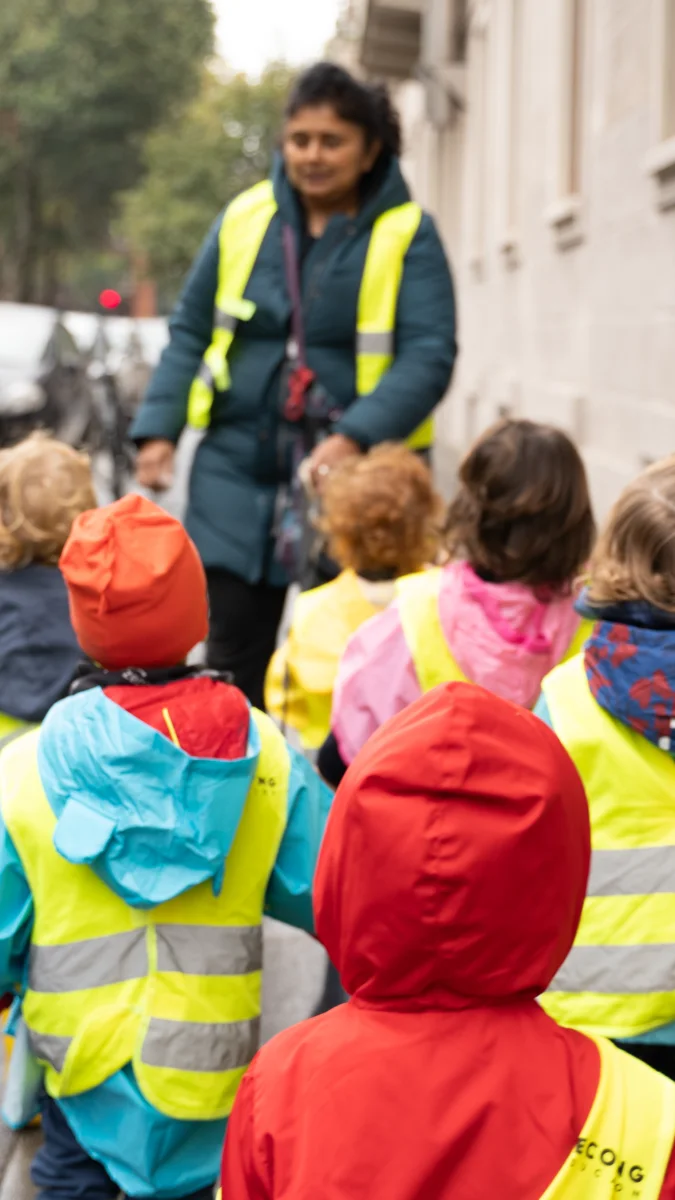
These outings stem from the children’s interests and their desire to make the most of everything the local area has to offer. Teachers and children use public transport to visit parks, markets, museums and places of interest.
Walking, waiting for the bus, observing what’s happening on the street: every journey becomes an opportunity to cultivate an observant eye, curiosity and an awareness of the world.
The benefits of playing outdoors
- Physical and emotional wellbeing Exercise, natural light and fresh air, contact with nature
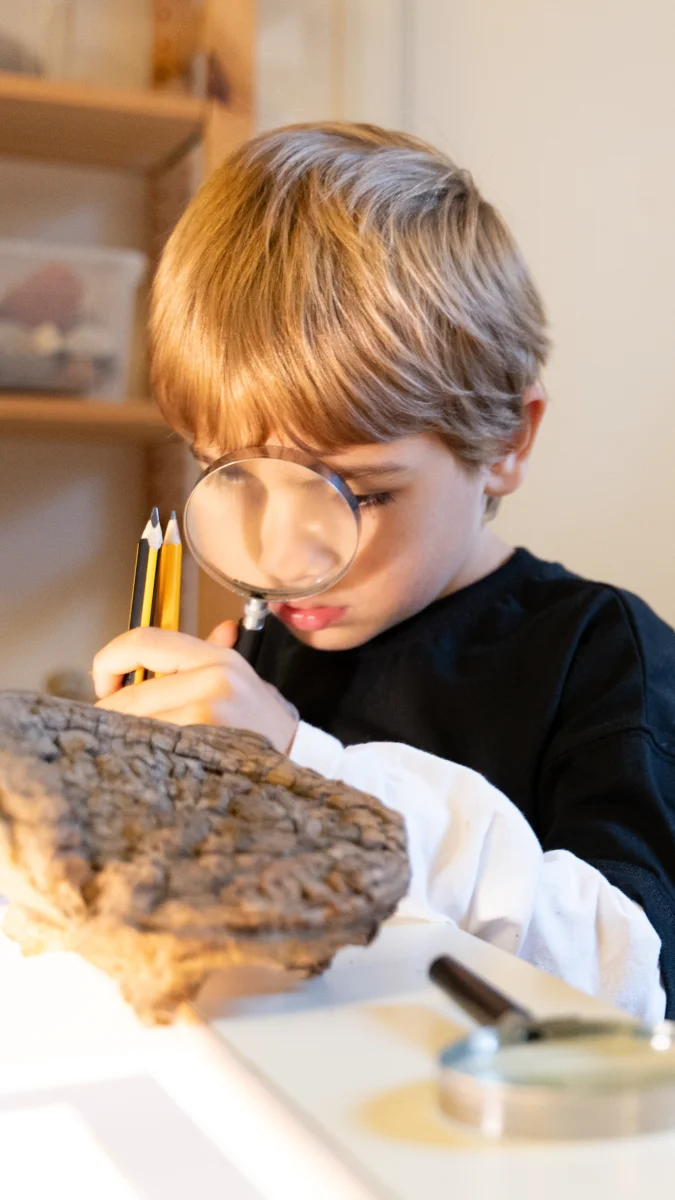
- Curiosity and observation Training the scientific eye
- Collaboration and autonomy Working together in real-life contexts
- Multisensory experiences Touching, listening, smelling, looking, coordinating body and mind
- Environmental awareness Knowing, understanding and respecting the ecosystem
- Risk education Exploring the limits and boundaries of the body, learning to assess simple environmental situations, and anticipating the consequences of one’s actions
Spaces that educate
In our approach, space is not a neutral backdrop: it is a third educator.
The spaces are designed to encourage children to explore, relax and discover. Every corner has been carefully thought out: the lighting, the materials within easy reach, and the freedom to choose where to go and what to do.
Spaces change over time, just as children do. They evolve in line with ongoing projects, the group’s questions and the changing seasons. A changing environment is one that speaks, and one that children learn to interpret.
The sections, the workshop, the garden, the neighbourhood: each setting offers different possibilities. Together, they form a rich and coherent educational landscape.
L’Atelier: a space for creative thinking
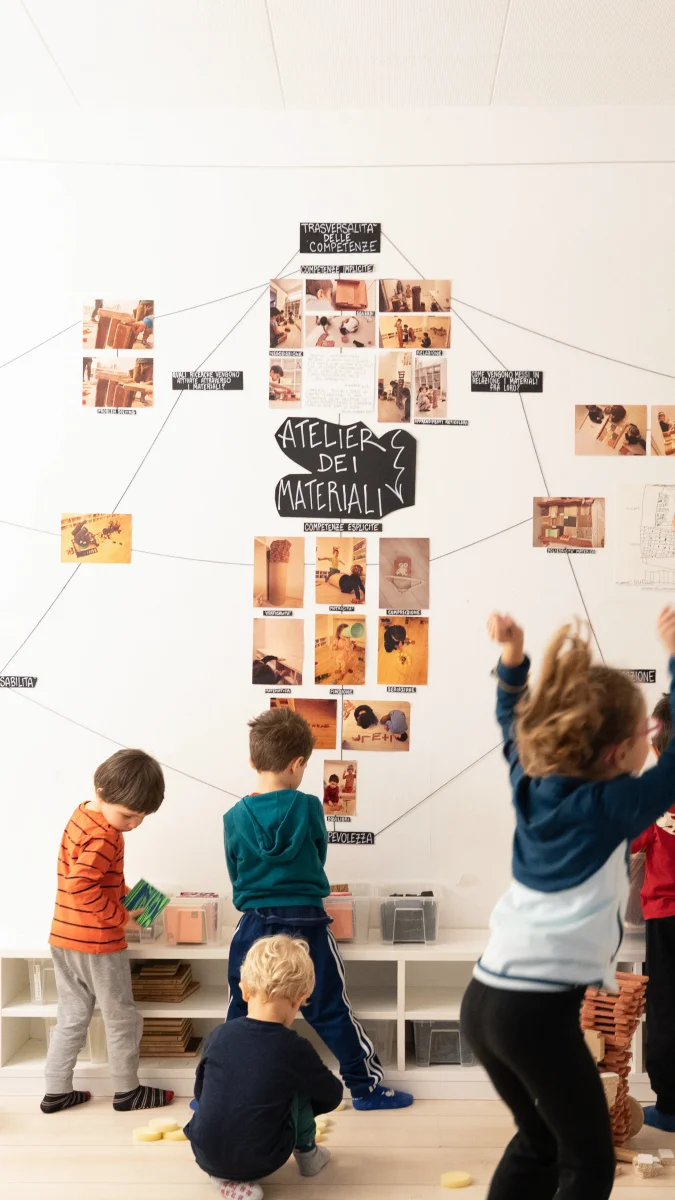
The atelier is one of the iconic environments of the ‘100 languages’ approach.
For us, it is not just a space, but an approach to education that permeates the entire nursery and school, extending into many small areas of exploration.
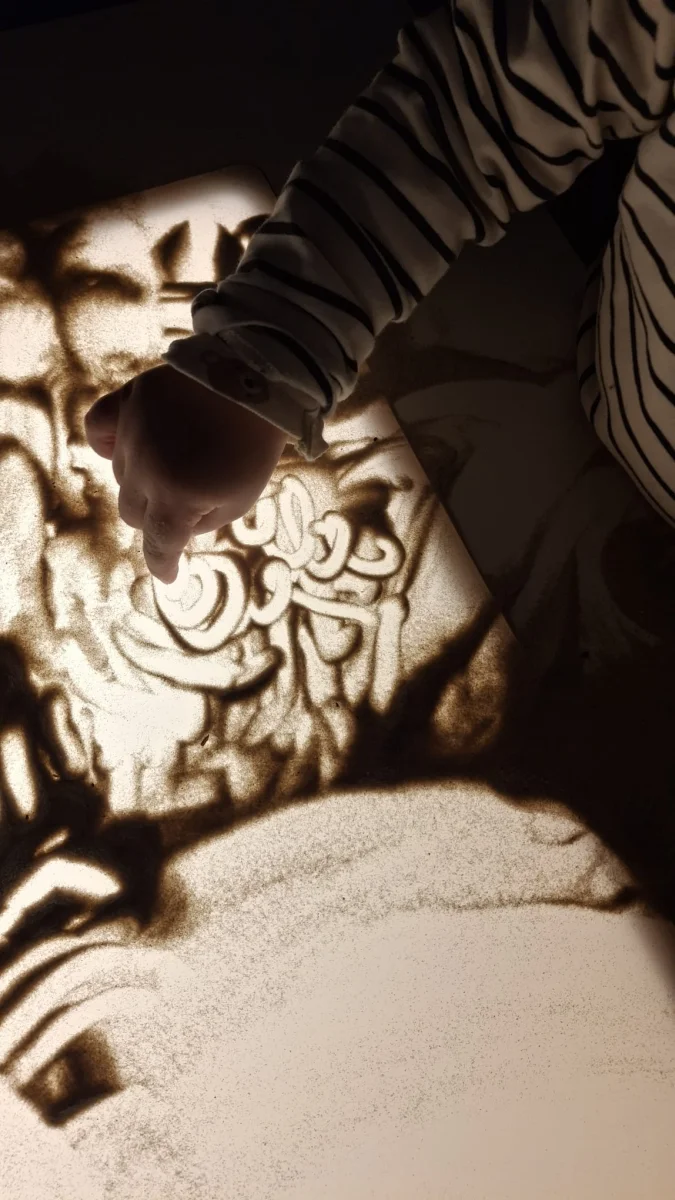
Children find rich and well-maintained environments where they can experiment with different materials and tools: from graphic design to modelling, and from light to observation under microscopes.
An example: snails in the garden
Children are fascinated by snails. Here's how we turn that curiosity into learning:
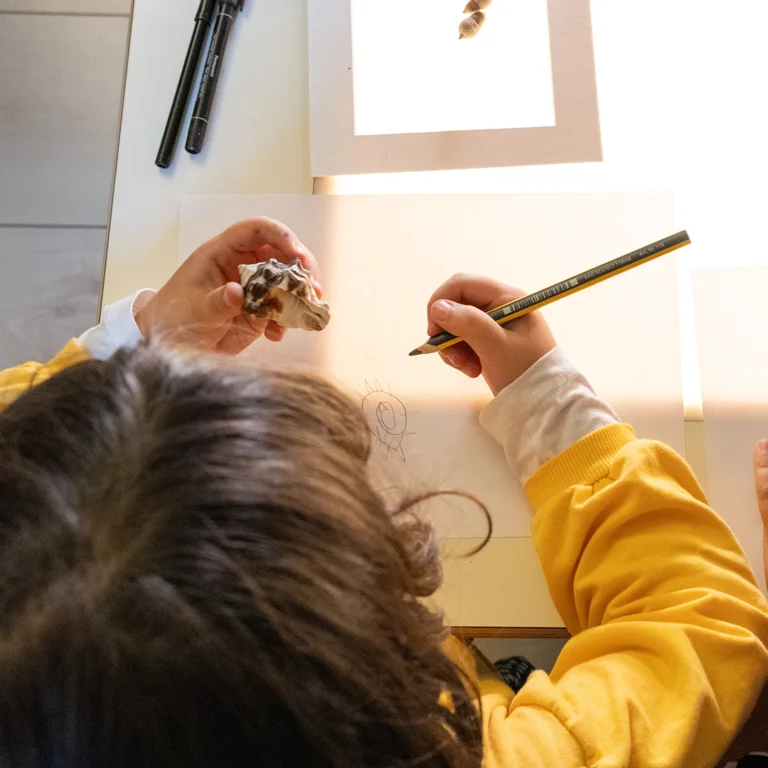
We take photos and print the pictures.
Let's observe their movements and think about how they move.
We're setting up a corner in the studio with books about snails.
Let's read picture books featuring snails as the main characters.
We draw from life, trying to reproduce the subject faithfully.
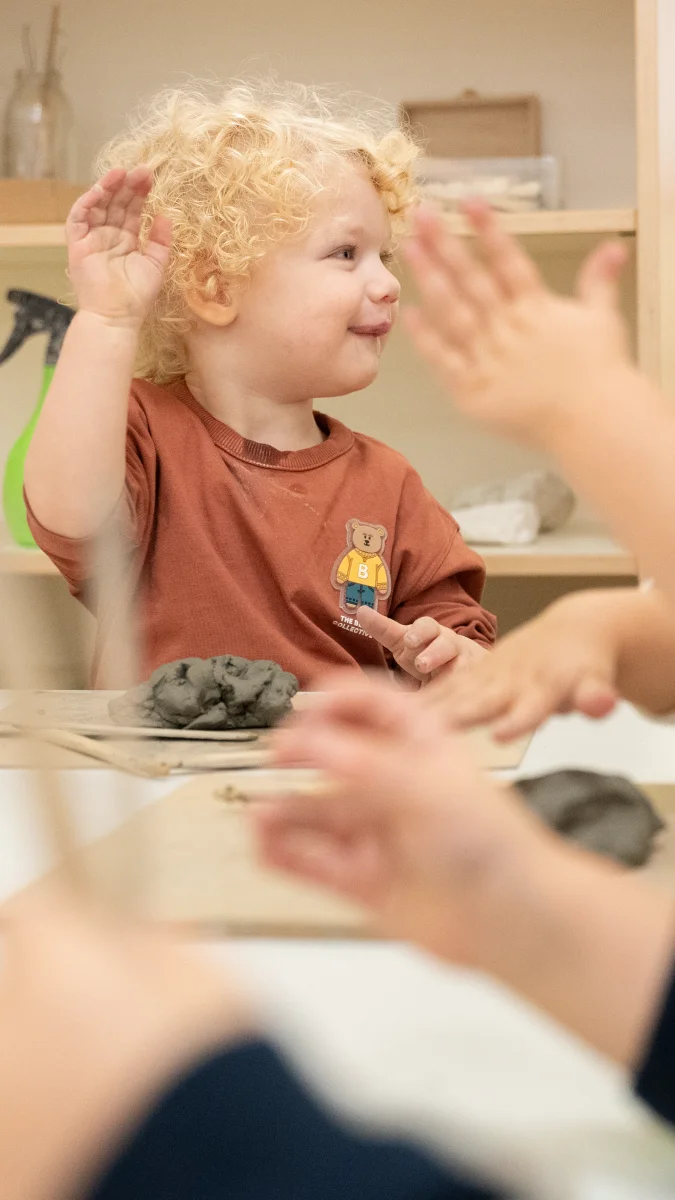
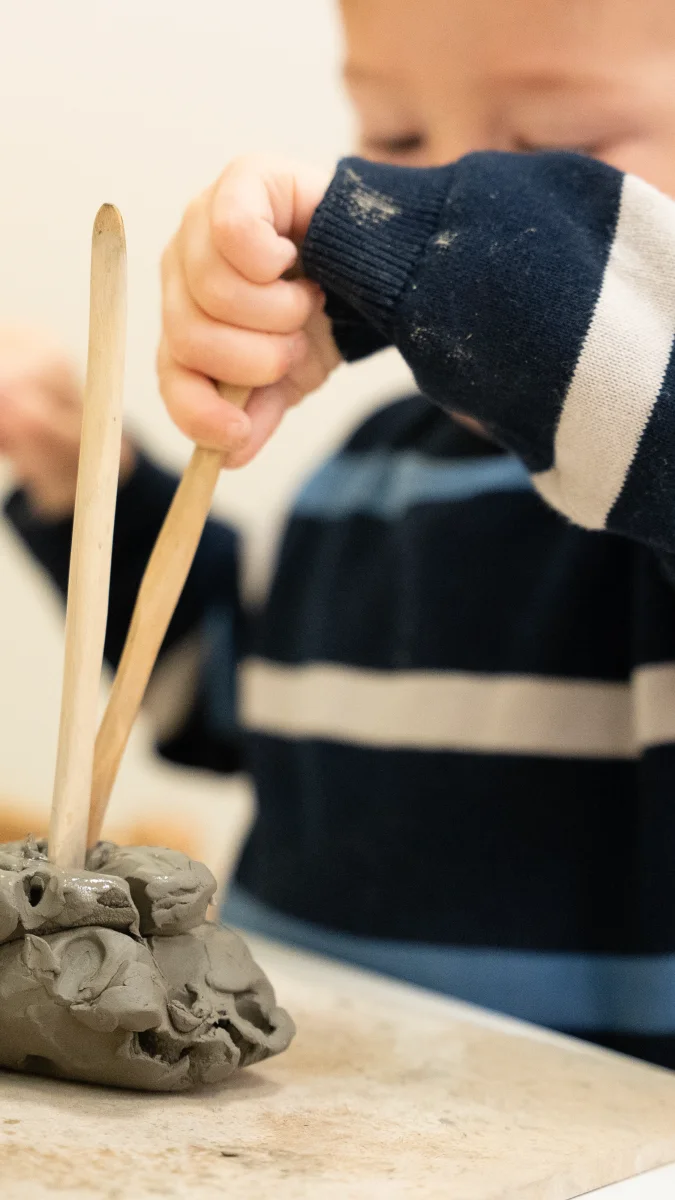
Let's make spiral patterns in the clay.
Observation gives rise to new questions, which we call lines of inquiry: why does a snail have a spiral-shaped shell? What other things have that shape?
Things are getting "complicated" and new challenges are emerging. Meanwhile, the walls of the section are being decorated with graphics, spirals and photos taken by the children.
Nursery 0-3
The sections
Locomotiva di Momo Nursery consists of three sections, each designed to accommodate a group of children of similar ages.
The sections are the group’s spaces: familiar and stable environments, where every child feels at home and knows their way around. This is where the morning welcome, the group gathering, free and structured play, and rest time take place.
The groups are formed to encourage meaningful relationships between children of a similar age. However, the educational programme also includes opportunities for children from different groups to meet: they get to know one another, observe one another and inspire one another.
As well as taking part in section activities, each group uses the workshop spaces on an alternating and ongoing basis: these are spaces designed to encourage exploration, creativity and discovery.
Settling in
Settling in to nursery is the time when every child and every family begins to get to know the nursery and build their confidence in the environment, the people there and the new daily routine.
This is an important step, which requires time and attention. We support them every step of the way, with our educators on hand and with the flexibility that every family deserves.
The model we use is called Participatory Settling-in, as children and parents are very actively involved and take part in the nursery’s full daily routine right from the start.
How it works
- The first few days take place with a parent or a caregiver present. The programme involves three days at the nursery, and in the days that follow, the children usually say goodbye to their parents for a few hours.
- There are no rigid rules; if the children are ready, they will be attending full-time after just a few days. Conversely, the transition period is gradually extended, in line with the child’s own pace.
- The nursery staff welcome and guide the children throughout the process with experience and sensitivity.
Infants (6–11 months)
For the youngest children, the day is organised around personalised care, designed to immediately meet the basic needs of each individual child, such as sleep, feeding and care.
Every little everyday gesture is an opportunity to connect and discover.
A Day at the Nursery
The day at nursery follows a familiar and reassuring routine, made up of actions that, over time, become good habits.
The morning welcome, snacks, lunch, and time set aside for personal care and rest mark the rhythm of the day and help the children find their bearings – always under the watchful eye of the teachers
Play, exploration and discovery
Alongside the daily routines, the nursery teachers provide opportunities for play and discovery every day. Materials are always within the children’s reach, and there are dedicated areas designed for building, exploring, inventing, handling objects and listening to stories.
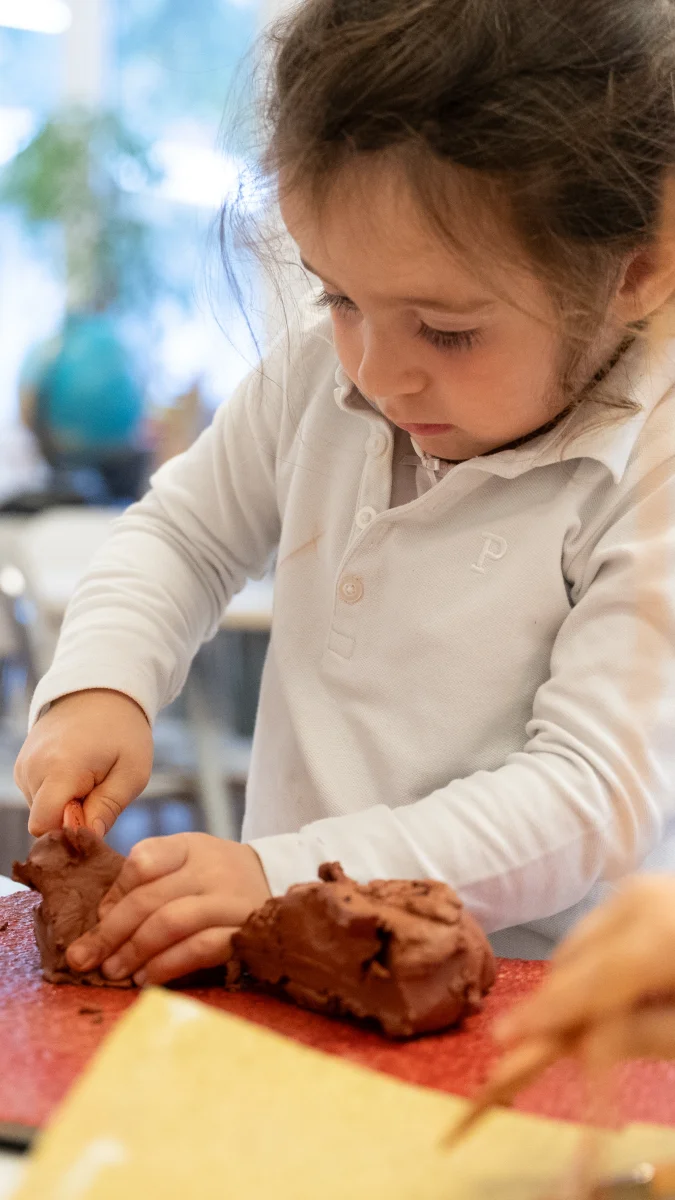
These are complemented by small-group activities: lighting, graphic design, painting and clay work. These are settings in which the teacher’s attention is focused on each child, with timings and methods tailored to their individual needs
Rest
Rest periods are planned according to the physiological needs of the youngest children, who deserve an immediate and personalised response at all times. For the children, nap time is a set period after lunch and may be extended according to each child’s needs.
Lunch: quality and seasonal produce
In line with our sustainable approach, we offer balanced menus that prioritise a wide variety of seasonal produce. The menus are designed in collaboration with nutritionists specialising in early childhood and approved by the ATS, in accordance with the Region’s guidelines.
- High standards of quality and food safety
- Seasonal menus, updated every year
- Pay close attention to food intolerances
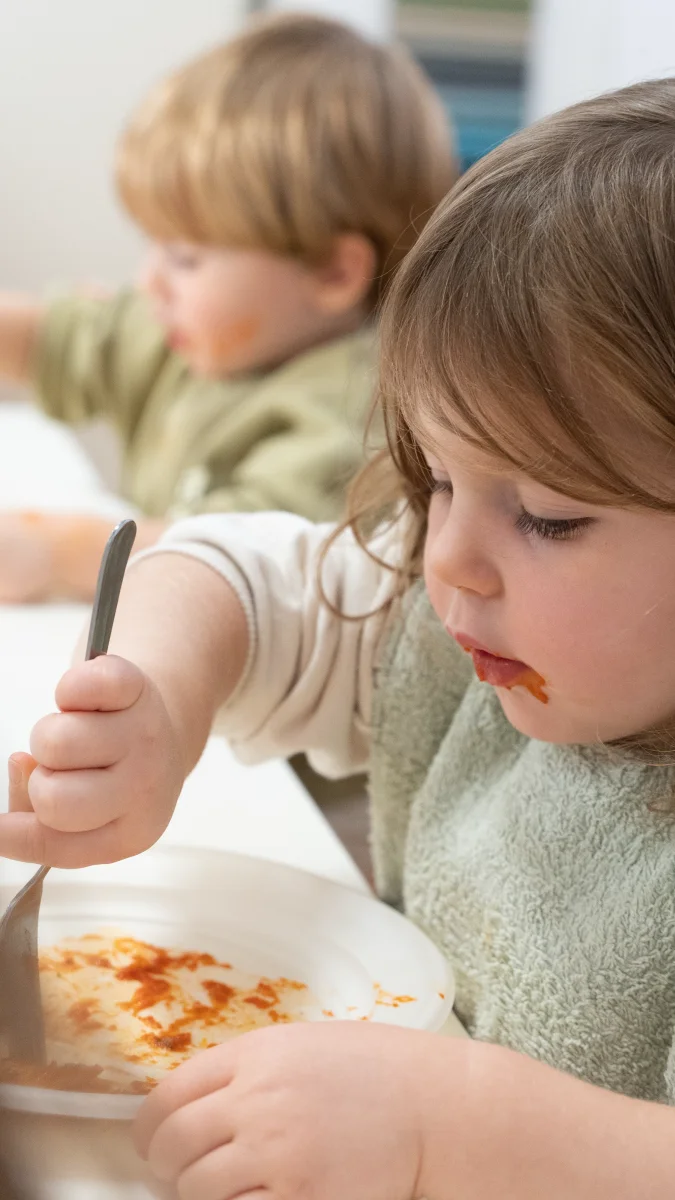
Lunch is a valuable learning opportunity for putting the rules of living together into practice and for developing independence and responsibility:
- be able to eat independently, using cutlery with confidence
- to practise grasping and coordination skills
- setting and clearing the table
- adjust the tone of one’s voice
- recognising food
- understanding seasonality
For younger children, the menu is agreed upon jointly by the family, the nursery and the paediatrician, to ensure that new foods are introduced gradually and with care. We support breastfeeding and offer personalised arrangements to ensure the wellbeing of every child and their mum.
The sections
Locomotiva di Momo Nursery consists of three sections, each designed to accommodate a group of children of similar ages.
The sections are the group’s spaces: familiar and stable environments, where every child feels at home and knows their way around. This is where the morning welcome, the group gathering, free and structured play, and rest time take place.
The groups are formed to encourage meaningful relationships between children of a similar age. However, the educational programme also includes opportunities for children from different groups to meet: they get to know one another, observe one another and inspire one another.
As well as taking part in section activities, each group uses the workshop spaces on an alternating and ongoing basis: these are spaces designed to encourage exploration, creativity and discovery.
Settling in
Settling in to nursery is the time when every child and every family begins to get to know the nursery and build their confidence in the environment, the people there and the new daily routine.
This is an important step, which requires time and attention. We support them every step of the way, with our educators on hand and with the flexibility that every family deserves.
The model we use is called Participatory Settling-in, as children and parents are very actively involved and take part in the nursery’s full daily routine right from the start.
How it works
- The first few days take place with a parent or a caregiver present. The programme involves three days at the nursery, and in the days that follow, the children usually say goodbye to their parents for a few hours.
- There are no rigid rules; if the children are ready, they will be attending full-time after just a few days. Conversely, the transition period is gradually extended, in line with the child’s own pace.
- The nursery staff welcome and guide the children throughout the process with experience and sensitivity.
Infants (6–11 months)
For the youngest children, the day is organised around personalised care, designed to immediately meet the basic needs of each individual child, such as sleep, feeding and care.
Every little everyday gesture is an opportunity to connect and discover.
A Day at the Nursery
The day at nursery follows a familiar and reassuring routine, made up of actions that, over time, become good habits.
The morning welcome, snacks, lunch, and time set aside for personal care and rest mark the rhythm of the day and help the children find their bearings – always under the watchful eye of the teachers
Play, exploration and discovery
Alongside the daily routines, the nursery teachers provide opportunities for play and discovery every day. Materials are always within the children’s reach, and there are dedicated areas designed for building, exploring, inventing, handling objects and listening to stories.
These are complemented by small-group activities: lighting, graphic design, painting and clay work. These are settings in which the teacher’s attention is focused on each child, with timings and methods tailored to their individual needs
Rest
Rest periods are planned according to the physiological needs of the youngest children, who deserve an immediate and personalised response at all times. For the children, nap time is a set period after lunch and may be extended according to each child’s needs.
Lunch: quality and seasonal produce
In line with our sustainable approach, we offer balanced menus that prioritise a wide variety of seasonal produce. The menus are designed in collaboration with nutritionists specialising in early childhood and approved by the ATS, in accordance with the Region’s guidelines.
- High standards of quality and food safety
- Seasonal menus, updated every year
- Pay close attention to food intolerances
Lunch is a valuable learning opportunity for putting the rules of living together into practice and for developing independence and responsibility:
- be able to eat independently, using cutlery with confidence
- to practise grasping and coordination skills
- setting and clearing the table
- adjust the tone of one’s voice
- recognising food
- understanding seasonality
For younger children, the menu is agreed upon jointly by the family, the nursery and the paediatrician, to ensure that new foods are introduced gradually and with care. We support breastfeeding and offer personalised arrangements to ensure the wellbeing of every child and their mum.
Preschool (3–6)
Vertical sections
Locomotiva di Momo Nursery School is organised into mixed-age groups: 3-, 4- and 5-year-olds together, a choice that offers significant educational value and has a major impact on children’s social and cognitive development.
The older children support the younger ones, creating an environment that is conducive to learning and cooperation.
This approach shapes the organisation of social life within the school, fostering an atmosphere of respect, trust and cooperation amongst the children, whose different skills determine the specific tasks they are assigned
The Italian mother-tongue teachers are the class teachers, and they are supported by English teachers who speak exclusively in English.
Settling in
The preschool welcomes children who have already developed strong social and emotional skills through their experiences in previous years.
They know how to spot interesting things, have learnt that other children are valuable playmates, and cope well with saying goodbye to their parents.
They therefore have the resources to experience school independently right from the very first day.
We have therefore decided to allow children to attend from the very first day; parents are invited to take part in the preparatory activities for the start of term by spending part of the morning of the first day in their child’s class.
The school-family partnership is built on mutual trust and on listening to the child’s needs. Where necessary, the timetable is tailored to each child’s actual settling-in process.
This is how every parent’s involvement in our educational community begins: school and family, partners in a child’s development.
The day
At preschool, every day is structured to give children the freedom to take the initiative, within a well-organised environment full of possibilities.
The sections are organised so that children can navigate spaces and materials independently, becoming active participants in the development of their own knowledge, whilst managing relationships and sharing.
Even mealtimes, personal hygiene and rest periods become valuable opportunities for mutual care: the children learn to look after themselves and to work together and support one another, step by step towards greater independence.
The morning meeting
The day begins with the assembly, a time when the group has its say, and which sets the tone for the rest of the day.
We take the register, count those present, organise the morning’s activities, and split into small groups for the workshops and games.
The assembly is the moment when the ‘I’ meets the ‘We’: the children understand what it means to grow up together.
Everyone feels that they are important to others. We share the rules for getting on well together, we make commitments, we listen to questions and try to answer them together.
Throughout the day
The middle of the morning is set aside for exploration and research projects.
The children build things, paint, mold clay and carry out experiments that combine science, art and nature. They listen, come up with ideas and draw stories.
Teachers observe, guide, and help the children to formulate their questions and keep looking for answers. They support the social dynamics and the recognition of emotions that emerge during play.
They create settings using new materials, engage the children in small groups using special tools, and produce documentation together with the children.
Nursery school is like a huge workshop for experiential learning.
Through a variety of materials, ways of communicating and situations, children build up their network of knowledge. They learn to observe, ask questions, look for solutions, experiment, overcome mistakes and feel confident in every area.
Day by day, they develop self-regulation and self-awareness.
Rest
We offer the children the opportunity to have a nap after lunch: this rest period is in line with their natural rhythms.
Those who don’t sleep find themselves enjoying moments of relaxation, to restore the energy expended during the morning.
Lunch: quality and seasonal produce
In line with our sustainable approach, we offer balanced menus that prioritise a wide variety of seasonal produce. The menus are designed in collaboration with nutritionists specialising in early childhood and approved by the ATS, in accordance with the Region’s guidelines.
- High standards of quality and food safety
- Seasonal menus, updated every year
- Pay close attention to food intolerances
Lunch is a valuable learning opportunity for putting the rules of living together into practice and for developing independence and responsibility:
- setting and clearing the table
- adjust the tone of one’s voice
- recognising food
- understanding seasonality
- to reflect on waste management
Vertical sections
Locomotiva di Momo Nursery School is organised into mixed-age groups: 3-, 4- and 5-year-olds together, a choice that offers significant educational value and has a major impact on children’s social and cognitive development.
The older children support the younger ones, creating an environment that is conducive to learning and cooperation.
This approach shapes the organisation of social life within the school, fostering an atmosphere of respect, trust and cooperation amongst the children, whose different skills determine the specific tasks they are assigned
The Italian mother-tongue teachers are the class teachers, and they are supported by English teachers who speak exclusively in English.
Settling in
The preschool welcomes children who have already developed strong social and emotional skills through their experiences in previous years.
They know how to spot interesting things, have learnt that other children are valuable playmates, and cope well with saying goodbye to their parents.
They therefore have the resources to experience school independently right from the very first day.
We have therefore decided to allow children to attend from the very first day; parents are invited to take part in the preparatory activities for the start of term by spending part of the morning of the first day in their child’s class.
The school-family partnership is built on mutual trust and on listening to the child’s needs. Where necessary, the timetable is tailored to each child’s actual settling-in process.
This is how every parent’s involvement in our educational community begins: school and family, partners in a child’s development.
The day
At preschool, every day is structured to give children the freedom to take the initiative, within a well-organised environment full of possibilities.
The sections are organised so that children can navigate spaces and materials independently, becoming active participants in the development of their own knowledge, whilst managing relationships and sharing.
Even mealtimes, personal hygiene and rest periods become valuable opportunities for mutual care: the children learn to look after themselves and to work together and support one another, step by step towards greater independence.
The morning meeting
The day begins with the assembly, a time when the group has its say, and which sets the tone for the rest of the day.
We take the register, count those present, organise the morning’s activities, and split into small groups for the workshops and games.
The assembly is the moment when the ‘I’ meets the ‘We’: the children understand what it means to grow up together.
Everyone feels that they are important to others. We share the rules for getting on well together, we make commitments, we listen to questions and try to answer them together.
Throughout the day
The middle of the morning is set aside for exploration and research projects.
The children build things, paint, mold clay and carry out experiments that combine science, art and nature. They listen, come up with ideas and draw stories.
Teachers observe, guide, and help the children to formulate their questions and keep looking for answers. They support the social dynamics and the recognition of emotions that emerge during play.
They create settings using new materials, engage the children in small groups using special tools, and produce documentation together with the children.
Nursery school is like a huge workshop for experiential learning.
Through a variety of materials, ways of communicating and situations, children build up their network of knowledge. They learn to observe, ask questions, look for solutions, experiment, overcome mistakes and feel confident in every area.
Day by day, they develop self-regulation and self-awareness.
Rest
We offer the children the opportunity to have a nap after lunch: this rest period is in line with their natural rhythms.
Those who don’t sleep find themselves enjoying moments of relaxation, to restore the energy expended during the morning.
Lunch: quality and seasonal produce
In line with our sustainable approach, we offer balanced menus that prioritise a wide variety of seasonal produce. The menus are designed in collaboration with nutritionists specialising in early childhood and approved by the ATS, in accordance with the Region’s guidelines.
- High standards of quality and food safety
- Seasonal menus, updated every year
- Pay close attention to food intolerances
Lunch is a valuable learning opportunity for putting the rules of living together into practice and for developing independence and responsibility:
- setting and clearing the table
- adjust the tone of one’s voice
- recognising food
- understanding seasonality
- to reflect on waste management
The educational community
In the Becoming Education model, children, parents and teachers are part of the same educating community, connected to the local area and in harmony with the environment.
Let’s build a community where parents feel welcome and involved. The educational partnership is based on trust, dialogue and collaboration.
The school is open to the local community: to the people, places and experiences that the neighbourhood has to offer. Because growing up well also means feeling part of something bigger.

THE EDUCATIONAL JOURNEY CONTINUES AT THE MADRE BUCCHI PRIMARY SCHOOL
Frequently asked questions
Start your journey at Locomotiva di Momo
Come discover Locomotiva di Momo: book a visit or request information. We look forward to seeing you!